

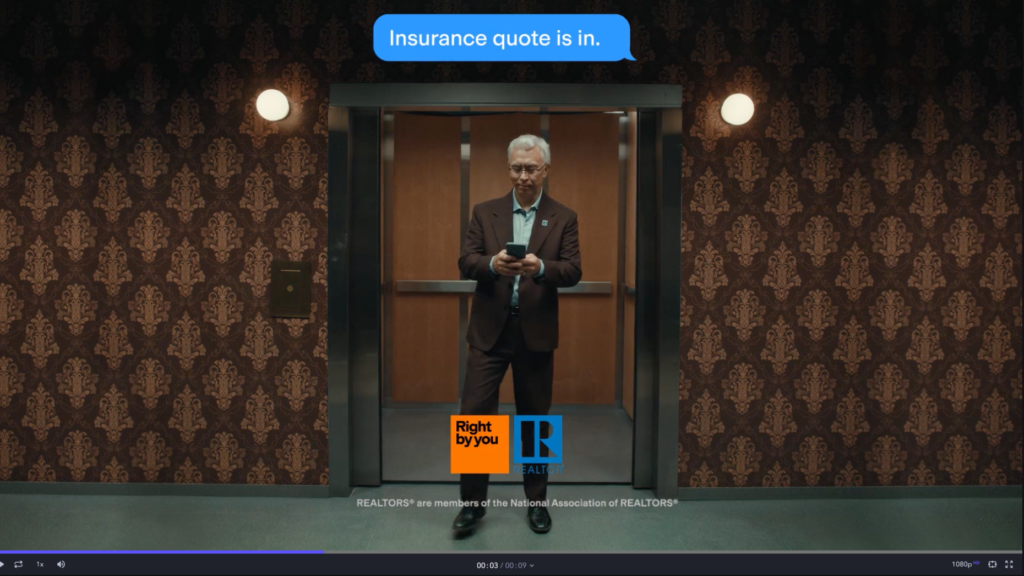
The 1.47-million member organization seeks to show consumers that “agents who are Realtors do more than open doors” with its slate of new ads.
If consumers don’t know quite who Realtors are, the National Association of Realtors wants to change that.
NAR released a new ad campaign on Monday, one that attempts to highlight the various unseen tasks that real estate agents do while helping their clients find, buy and sell real estate.
The 1.47-million-member organization said that its new campaign sought to affirm the Realtor brand’s status among consumers on behalf of membership.
“One key pillar of NAR’s strategic plan is to reaffirm the Realtor brand as a trusted symbol of expertise, integrity and reliable service for consumers. This year’s campaign educates consumers and differentiates NAR’s members as the gold standard in the industry, while at the same time helping members feel the full support of their NAR membership.”
In one 30-second commercial, titled “The One,” a theoretical buyer client floats the idea about adding an addition to a home he’s touring.
“We need to check the zoning,” the Realtor says, swiftly opening a door under a flight of stairs and grabbing a set of plans.
The agent then hustles around from the office back into another house, taking phone calls along the way.
She opens another door, where an electrician is sitting among a tangled web of wires.
“Upgrade needed?” the agent asks.
“Mhm,” the electrician replies.
The fast-paced ad campaign is an apparent attempt to undercut the notion among some that real estate agents primarily open doors.
“Agents who are Realtors do more than open doors,” the ad says, “they bring you home.”
A second 30-second ad, titled “Arcade,” shows a Realtor helping a client walk through a commercial property. He, too, leans on a network of experts who help him conduct due diligence, clear financing and make it to closing.
The ads are a product of the $45 ad campaign assessment that NAR members pay along with their dues. Since last year, 78 percent of the assessment has been used to pay operating expenses amid ongoing belt tightening by the organization.
The assessment was created in 1999, when it was $10, and has slowly increased since then. It was last raised in 2022.
Email Taylor Anderson