

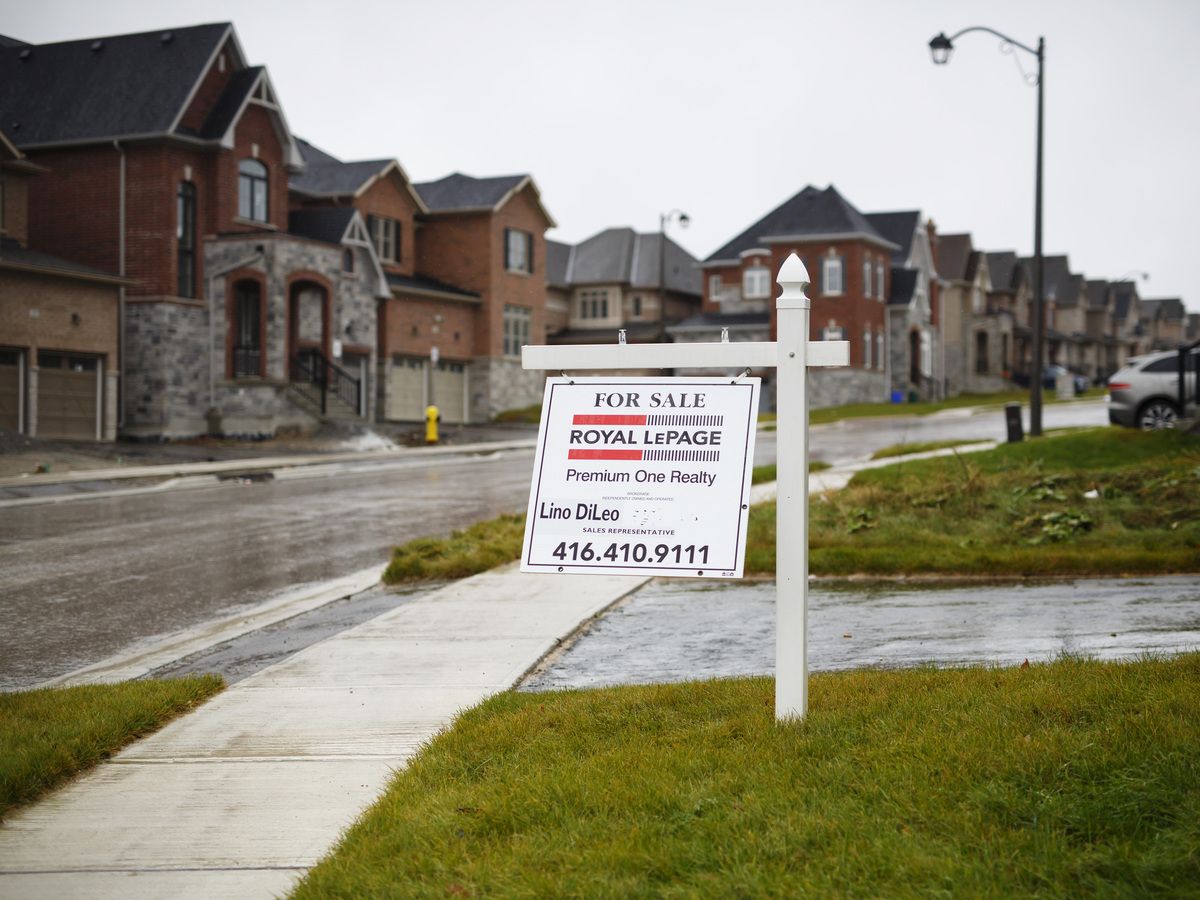
Some people have to buy a home now. This column is not for them.
This is for the potential buyers who have the luxury of patience — the ones still renting or bunking with others by choice, not necessity.
We’re just two weeks away from the start of spring, and spring in real estate is traditionally prime time. The prevailing assumption this time of year is that buyer competition heats up and prices firm up.
But this is no traditional market.
Four factors, among others, might make this spring market a bit less festive:
#1. The lack of further rate relief
Before war broke out in Iran,
bond yields
were diving as the economic outlook dimmed. Some expected them to break last October’s lows and pull
fixed mortgage rates
back down into the mid–three per cent range.
But once the first bomb dropped in Iran that dream packed a bag and left town. Thanks in part to oil prices rocketing past their one-year high, central banks are now on high alert for
inflation
pressures.
That has investors selling bonds, which pushes yields higher. Usually this would pull
fixed mortgage rates along for the ride — in the wrong direction.
Higher
interest rates
create several obvious headaches for real estate:
- They boost mortgage payments, which dents affordability.
- Larger payments mean people qualify for smaller mortgages.
- Investors pull back as steeper borrowing costs hurt cash flow.
- Market psychology takes a hit, given the widespread belief that Canadian real estate runs on low rates.
The point being: Canadian home prices rank among the highest relative to income on the planet. Lower rates are the grease that slips buyers through the front door of new homes.
Curiously, however,
rates
have been falling since October 2023, and national average prices are still at 18-month lows. The rate relief that was supposed to revive the market has so far done approximately nothing.
Even so, rate leverage remains a major determinant of home values. And as spring market 2026 gets underway, it looks like lower rates are not riding in to save anyone.
#2. People buy homes, and there are fewer people
A National Bank of Canada report on Wednesday predicted that “household formation over the next two years is likely to be the lowest on record due to the slowdown in immigration.”
The same report noted that the inventory of unsold new homes is “now reaching its highest level ever recorded.”
Less demand and more supply is not a recipe for rising home values.
Worth noting: Those are national numbers and real estate is famously local. Certain markets (St. John’s, N.L., as one example) are still going gangbusters thanks to regional catalysts.
#3. Canada–United States–Mexico Agreement (CUSMA) and uncertainty remain a drag
The good news is that consumer confidence is at a 15-month high, according to Nanos Research.
The bad news is that U.S. President Donald Trump’s tariff war on Canada — and fears that he could pull out of CUSMA — are still spooking buyers.
Royal LePage’s CEO Philip Soper has
as the single biggest factor holding back housing, which is impressive considering the competition.
#4. Weakness begets weakness
A relentless drumbeat of headlines about falling prices — particularly in Toronto’s condo market — has a way of getting into people’s heads.
It makes buyers less aggressive with offers and sellers more anxious to list and negotiate, a combination that rarely does home prices any favours.
Not coincidentally, Nanos reports that the percentage of Canadians who believe real estate values will increase in their neighbourhood in the next six months sits at just one in three (34 per cent), well below the long-term average of 40 per cent.
Timing is tough
Timing real estate is folly. For all we know, Trump could sign off on a trade deal that restores certainty and jolts the real estate market back to life.
But the points above, especially the population slowdown, suggest that would-be buyers have no compelling reason to panic-buy just because the calendar says spring. You can be a bit more picky.
It’s also worth noting that most analysts don’t expect war in Iran to become a prolonged conflict — the kind that sends oil prices well past $100 a barrel. But if it did, history is fairly clear on what tends to follow: a broader economic slowdown, and quite possibly a recession.
Is it worth betting on lower prices?
A five per cent dip in prices amounts to a $32,647 savings on the average home purchase.
That same drop would save mortgagors nearly $5,000 in interest over the first five years alone — assuming a standard mortgage with 20 per cent down.
Of course, if prices do drop, affordability will improve, which will ultimately coax more buyers out of the woodwork and create offer competition.
National Bank also notes, “there is a real risk that housing construction will slow down.” All else being equal, a contraction in supply could also eventually support prices.
In the meantime, there’s no need to get swept up in the annual “spring market” real estate hype. Mind you, patient buyers should keep monitoring their local market.
From a macro view, if CREA’s national average price breaks below $648,000 this spring (it’s around $653,000 now), that would defy seasonal price strength trends.
If that happens, it could be a fairly blunt signal that more weakness may be waiting ahead. And when prices soften long enough, a dip-buying opportunity always follows — in time.
Robert McLister is a mortgage strategist, interest rate analyst and editor of MortgageLogic.news. You can follow him on X at @RobMcLister.
Looking to save on your mortgage?
For the best national insured and uninsured mortgage rates, updated daily, please visit our mortgage rate page
here
.