

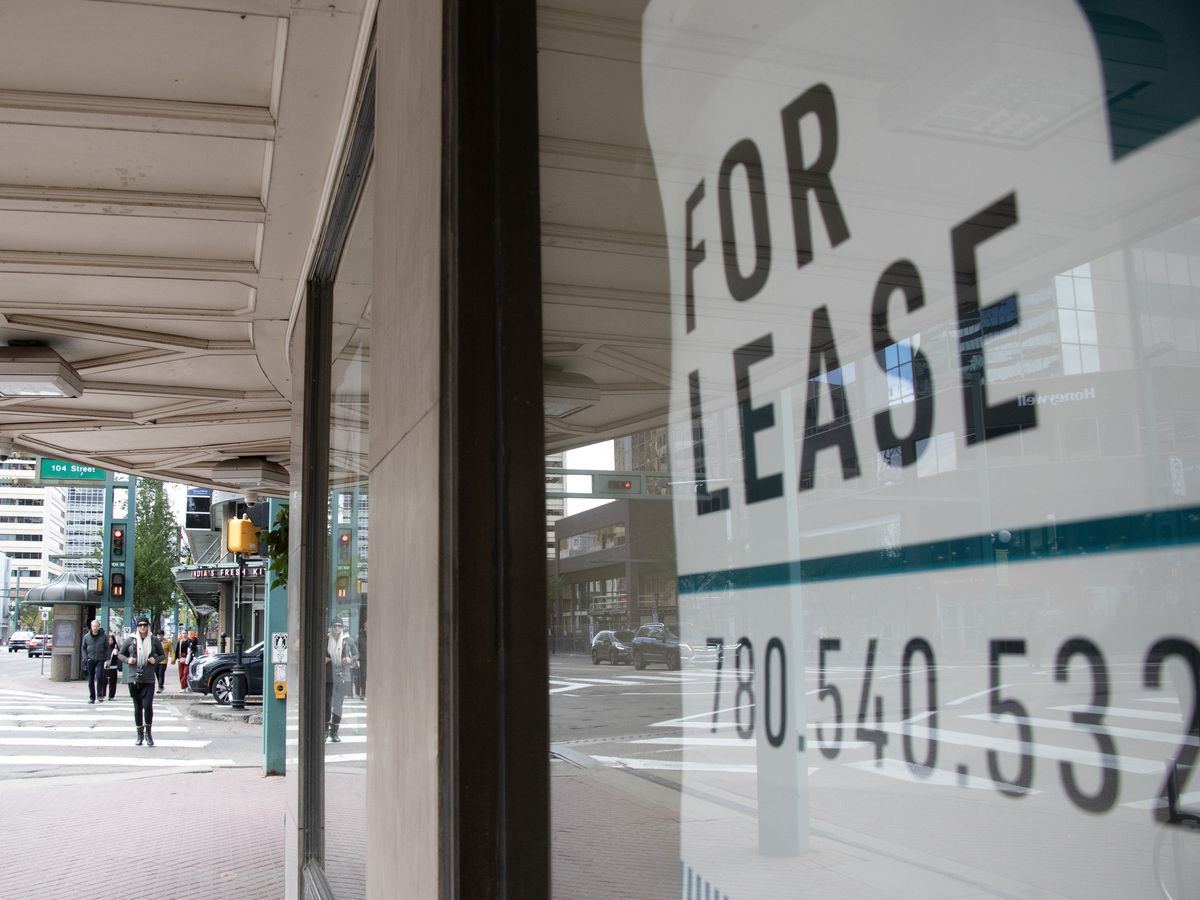
There’s talk of a rebound in the commercial real estate sector, but one industry executive who specializes in insolvency says he’s busier than ever.
Jeffrey Berger, managing director of TDB Advisory, which handles restructuring, dispute resolution and estate trustee services, gauges the market by his transaction volumes.
“Our business — we deal with a lot of enforcement actions,” Berger told a real estate conference last week. “I can tell you, the volume seems to increase in what we’re seeing.”
Berger, who works with real estate lenders, said condo projects are among those feeling the most pain.
He made the comments at the 14th Great Canadian Real Estate Conference in Toronto, put on by Veritas Investment Research, an independent equity research firm.
Pulling no punches, the commercial real estate panel agenda was titled The Price of Denial and was moderated by Anthony Scilipoti, chief executive of Veritas.
“Are owners and lenders prudently waiting for markets to recover or merely delaying an inevitable reckoning?” was a pivotal question posed to panelists ahead of the event.
Scilipoti said there are signs of improvement in the real estate sector, but noted recovery really depends on which individual sector you’re talking about: office, apartment, retail or industrial.
“The title is deliberately provocative. It looks like denial could prove to be patience. Owners and lenders may be right to wait for more rates and a stronger economy, but they also may be postponing the recognition of losses,” he said.
Berger made it clear condo development sites are driving some of the volume he is seeing in his business. Some sites have been sitting for a long time, and some receiverships that would have seen a site sold in three to six months in the past can now take three to five years to clear.
“There are different asset classes we are seeing more frequently. There is a backlog of properties in distress and projects in distress that are still getting worked through,” he said. “From our perspective, we hope it’s at the bottom. Consumer insolvencies are at an all-time high. There is a lot of pain out there.”
Even industrial , once red hot during the pandemic because of the flurry of e-commerce activity, has seen some insolvencies.
“We have seen some industrial that bought at the peak (face insolvency), but it’s a very small portion,” said Berger, adding that while office vacancies are up outside core downtown markets, not many have found their way to the bankruptcy level.
He said another wrinkle for people “having their backs up against the wall” has been increased fraud, including those pretending to have financing that turns out to be completely fake.
Mario Lefebvre, chief economist at real estate data company CoStar Group, said one factor that bodes well for real estate pricing is a reduction in new supply.
“I think what’s probably saving today in a lot of sectors is the fact that the construction pipeline is probably at the slowest ever,” he said, adding that much of the empty space across commercial sectors is being absorbed.
David Black, head of value and risk advisory at real estate company JLL Canada, said he tiptoes around valuations because today’s rising transaction volumes come from deals done three or four months ago.
“We’ve seen the cost of capital potentially go up,” said Black. “We have seen a bond yield spike, and we’re getting a lot of calls from our clients, which are pension funds.”
They ask what a rising risk-free rate for parking money will mean for real estate valuations, including whether returns or cap rates have to rise to justify investing in property. Higher cap rates mean lower real estate values.
“We don’t know yet. We’re anecdotally hearing in transactions that some buyers still have complete conviction, and they will respect the price they negotiated a month or two ago,” said Black. Others, however, are less resolute.
The JLL executive said development land is probably his biggest concern, and plans are often being reworked multiple times to make a project work. “When we get version 47, we know you are moving every number possible to make it work and it usually doesn’t,” he said, adding that some pockets of office are really stranded in places, such as suburban office buildings.
But the lack of transactions continues to make it difficult to price property, something that is being driven more by sentiment and opinion than by science, he said.
“There is going to be proof that comes, and people will be proven right or they are going to be proven wrong,” said Black. “It’s not certain property types, it is some pockets of Canadian commercial real estate that are still overvalued.”
• Email: gmarr@postmedia.com