

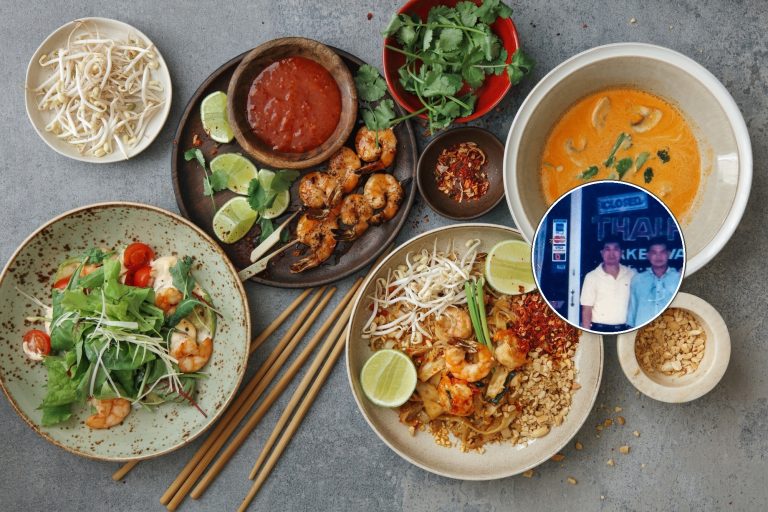
Stroll down any suburban high street and chances are you’ll find a Thai restaurant. It might be a bustling establishment with a punny name (Thai Riffic, anyone?), or a neighbourhood takeaway where the owner knows your order by heart.
So woven into the fabric of everyday life is Thai cuisine, it’s easy to forget there was a time when most Australians had never tasted Pad Thai, green curry or tom yum.
Today, Thai restaurants number in the thousands, but pinning down an exact figure is tricky.
A 2014 University of Sydney report, Thailand in Australia, put the national total at more than 3,000 – more than three times per capita than the United States. In Greater Sydney, nearly a quarter of the restaurants listed in the Australian Restaurant Directory were Thai.
As tourism to Thailand has exploded, so has its culinary scene back in Australia. Picture: Getty
More than a decade later, the report’s co-author, Professor Philip Hirsch, believes the Sydney tally could be considerably higher.
“I know that 10 years ago there were more than 700 Thai restaurants in Sydney. I’m not sure about the numbers now, or how you would count them, but I wouldn’t be surprised if there were 1,000 or more,” Mr Hirsch said.
How Australia’s Thai scene started
Determining Australia’s first Thai restaurant is similarly contentious.
Food historian Jan O’Connell places the opening of Melbourne’s Bahn Thai on St Kilda Road to 1976, alongside another Thai restaurant in Perth, while Thailand in Australia dates the trailblazing Siam restaurant on Curlewis Street in Bondi to the same year.
David Thompson, often dubbed Australia’s ‘Godfather of Thai Food’, remembers Siam as a “mum and dad operation.”
“Like many of the first Thai restaurants in any country outside of Thailand, it was run by immigrants trying to make a living abroad, but without the experience of being cooks or having access to ingredients that would allow for any legitimate and faithful rendition,” Mr Thompson told realcommercial.com.au.

A newspaper advertisement for Pawan’s Thai in 1970s’ Sydney. Picture: Australian Food Timeline
Adding another contender to the wok, O’Connell’s Australian Food Timeline identifies Pawan’s Thai Restaurant as predating them all, opening at 300 Darling Street in Balmain in 1975. Its claim to the title, however, is complicated by debate over how faithfully its menu reflected traditional Thai cooking.
“It was run by two gay guys who simply loved Thai food, having been there on a holiday,” Bob Larkin, co-founder of Bahn Thai, told Jan O’Connell.
“My wife can remember later having a conversation with the owner of Siam at Bondi lamenting the fact they called it Thai food.”
Professor Hirsch also named Caysorn Thai in Haymarket among the country’s earliest Thai restaurants, which still operates today.
Winning over Australian palates
While the Cantonese-style Chinese restaurant rose to prominence in Australia during the 1950s, Thai cuisine would take another three decades to find its footing.
The Colombo Plan brought small numbers of Thai students and trainees to Australia from the 1950s, but the first major wave of Thai migration followed in the 1980s and 90s.
Family migration pathways and growing demand for overseas education, fuelled by rising wealth in Thailand, helped drive the influx. Between 1981 and 1991, Victoria’s Thai-born population alone roughly quadrupled.
As a result, Thai restaurants also multiplied, growing from a handful to more than 40 nationally by 1986.
Among those pioneers was Pron Prohm in North Strathfield, which remains a flourishing local restaurant today. In 1985, founders Sakchai and Dilok bought a local French restaurant for approximately $25,000 and transformed it into a Thai eatery.

Pron Prohm started in North Strathfield more than 40 years ago and still stands to this day. Picture: Supplied
“Dad told me there were lots of Chinese restaurants back then, but Thai food was not very well known,” said Dilok’s son, Dereck Thamrak, who now runs Pron Prohm.
Chinese restaurants had introduced generations of Australians to dishes such as Mongolian lamb and honey chicken, adapting their menus to local tastes. For Pron Prohm’s founders, winning over unfamiliar palates meant making some concessions of their own.
“Dad and Sakchai tried as best they could to make Pron Prohm authentic Thai cuisine, but they definitely had to tone down the level of spice,” said Dereck. “Back then, the first thing Australians would associate with Thai food was ‘too spicy’, which I think initially turned a lot of people off.”
Sourcing ingredients presented another challenge. Mr Thamrak said staples such as lemongrass and makrut lime, essential to dishes like tom yum, were available only in dried form in the early days. Today, fresh Australian-grown produce and well-stocked Asian grocers make recreating those flavours far easier.
“Asian groceries now have 95% of the ingredients that you need to cook Thai dishes authentically. Although some of the ingredients, like chilis, may not have the same level of fragrance and the spiciness. But I would say blindfolded, you wouldn’t be able to tell the difference.”

Sakchai and Dilok, founders of Pron Prohm. Dilok’s son, Dereck Thamrak runs the restaurant today. Picture: Supplied
Inside the 1990s boom
Having established itself as an affordable alternative to Chinese takeaway in the 1980s, Thai dining underwent a transformation in the 90s. Suburban restaurants continued to multiply, while a new wave of chefs introduced diners to the cuisine’s depth, complexity and regional diversity.
By 1999, Sydney alone had more than 400 Thai restaurants – a dramatic increase from the handful operating two decades earlier.
David Thompson said Thai food’s growing prominence helped distinguish Sydney’s dining scene from Melbourne.
“It was quite interesting; Melbourne was Chinese when it came to its Asian understanding of cuisine, but Sydney was more Thai. I can’t be sure, but it was possibly that there were more Thais coming to Sydney.”
Among the personalities who helped shape Sydney’s growing appetite was chef-restaurateur Prasit Pratteeprasen. Famous for his signature rainbow-mohawk and vibrant personality, venues like Potong and Prasit’s on Crown popularised authentic Thai food in Sydney, moving it beyond basic Westernised fare into a sought-after dining experience.
David Thompson was also expanding diners’ expectations. His Darley Street Thai began in Newtown in the early 1990s before moving to Kings Cross, helping establish Thai cooking as a cuisine worthy of serious culinary attention. Sailors Thai followed in The Rocks in 1995, combining a restaurant with a more casual vibes of a local canteen.

Aussies’ culinary tastes are changing and now demand more authentic Thai experiences. Picture: Thai Town Sydney
For Thompson, the decade’s transformation was driven by two distinct strands of restaurateurs.
“One was the Thai mums and dads, the immigrants, who found themselves in the Australian suburbs and cooked what they knew with a degree of generosity. But then there were a few bright personalities, normally guys like Prasit, who cooked with an openness because they felt liberated from their own constraints.”
Some Thai migrants longed for home, but Thompson said others embraced the freedom of life abroad. Away from Thailand’s strict social conventions, eccentric entrepreneurs found room to express themselves in Sydney’s 1990s restaurant scene, bringing their individuality to the venues they opened and the food they cooked.
A new generation at the table
In October 2013, the City of Sydney approved three street signs marking Thai Town, making it the second in the world officially recognised by its host city, after Los Angeles in 1999.
Dereck Thamrak said these growing communities have helped Australian restaurants capture the diversity of Thai cooking, with once-elusive regional ingredients now readily available.
“You can now walk into a grocer in Thai Town and find ingredients specific to different regions of Thailand, which allows restaurants to recreate those flavours more faithfully,” he said. “Some people even prefer the Thai food here because Australia has such incredible produce.”
Over the past decade, that diversity has found expression in the southern Thai specialities of Melbourne’s R Harn and the contemporary menus of Adelaide’s Kiin and Fremantle’s Paste, which opened in 2025. Alongside Sydney’s Porkfat, these venues demonstrate just how far Australians’ appetite for Thai food now extends.

Thai Town in Sydney was opened in 2013. Picture: Supplied
The next chapter is also unfolding in the suburban restaurants that helped establish the cuisine here. At Pron Prohm, Dereck is continuing the business his father helped build more than 40 years ago.
“I used to do my homework in the corner, help wash the dishes, answer phones and do some waitering. Not much has changed, except now I’m in charge,” laughed Dereck.
Taking the restaurant forward means balancing familiar favourites with changing tastes. Cashew chicken and green curry are mainstays, while additions such as crispy pork belly have taken off in the last decade.
“Everyone wants crispy pork. With the advent of social media and Australians travelling to Thailand a lot more, people are certainly more adventurous now with Asian cuisines. They demand and expect an authentic experience.”
The latest commercial property news
Get the latest news and insights straight to you.