

Sofitel Queenstown Hotel & Spa, which recently sold for $NZ92.5m.
Wealthy Chinese tourists are spending big on luxurious hotels, which is supercharging the market down under.
The luxury hotel market is growing faster than the broader hotel market, according to CBRE’s latest luxury hotel market report. It found demand across major Australian and New Zealand markets helped produce a 2.9 per cent compound annual growth rate since 2019, more than twice the broader hotel market’s 1.3 per cent.
Investment in the luxury hotel sector from Auckland to Perth is being driven by increasing demand and growing rate premiums coupled with a limited development pipeline.
The report found that Chinese travellers spending is fuelling much of the demand for luxury hotels. China is Australia’s highest-spending inbound market with Chinese travellers spending $13.7bn in the year ended March 31, or 24 per cent of total international expenditure.
Occupancy across luxury hotels has remained stable at 79 per cent despite new supply, given that since 2020, 20 luxury hotels comprising 3,517 rooms have opened in Australia and New Zealand representing around 33 per cent of all rooms delivered during this period. Melbourne led Australian delivery with six luxury hotels including the Ritz-Carlton, Lanson Place, The Lyall, and the Hannah Street Hotel.
In Australia, the luxury segment of the market represented 33 per cent of all rooms delivered during the period.
The analysis shows the median transaction price per key soared by 81 per cent to $718,000 in 2023 up until now from around $396,000 in 2011–2014.
Australian and New Zealand growth is attracting new global brands to the market such as the Waldorf Astoria and supporting expansion of the hotel market through conversions, repositioning, branded residences, and independent operating models.
Since 2021, $3.2bn worth of luxury hotels sold in Australia and New Zealand largely to international organisations with China and Hong Kong investment particularly active in the six years to 2018, according to the CBRE report.
Singaporean and Malaysian capital has been steady with a more diversified buyer pool of late.
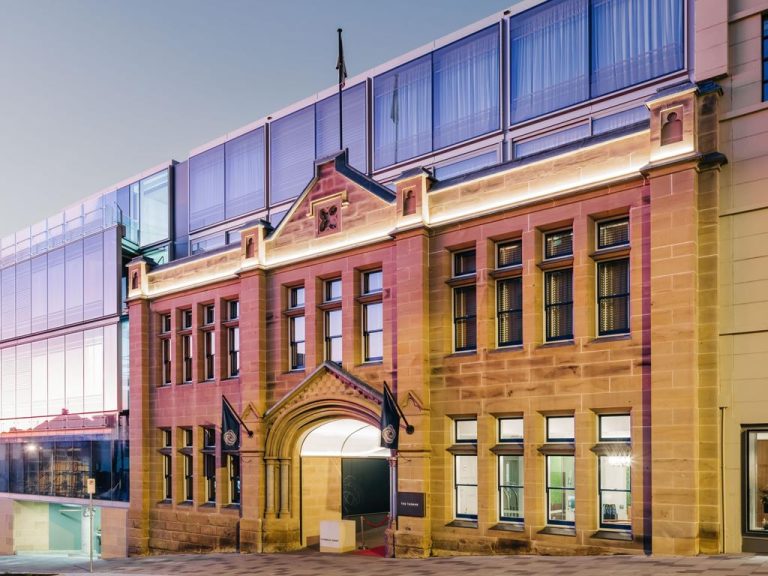
Recent sales included the InterContinental Sydney in Double Bay which sold for $205m, the $338m The Tasman in Hobart and the NZ$92.5m sale of the Sofitel Queenstown Hotel and Spa. The largest deal was the sale of the Waldorf Astoria Sydney which is still under construction for $575m to Fiveight.

Sofitel Queenstown Hotel & Spa.
According to CBRE, repeat sales provide evidence of value growth given the price per key jumped to $722,000 in 2021 for the Sofitel Sydney Wentworth from $461,000 in 2014.
CBRE’s head of hotels, capital markets, Pacific, Michael Simpson said international capital has been an important driver of investment.
“This depth of offshore interest has supported liquidity and helped establish new pricing benchmarks alongside active domestic capital,” Mr Simpson added.
“These transactions have established new benchmarks for absolute price, price per key and yield, attracting both domestic and international capital. This depth of offshore interest has supported liquidity and helped establish new pricing benchmarks alongside active domestic capital,” Mr Simpson added.
CBRE director hotel research, Ally Gibson added that since 2019, luxury average daily rates increased across every market analysed and premiums are widening.
“In Australia, the average luxury ADR premium over the all-scales sector increased by 53 per cent, from $62 in 2019 to $94 in 2026.

Wentworth Bar in the Sofitel Sydney Wentworth, which sold for $315m.
“Queenstown’s premium rose from approximately NZ$78 to NZ$140, the highest of any market analysed, reflecting its position as a tightly supplied luxury leisure destination.”
Queenstown produced the strongest ADR performance with an average of 11 per cent annually as the market continues to evolve, according to the report. “Brisbane and Perth followed at around 7 per cent and the Gold Coast at 6 per cent.”
Ms Gibson added that Sydney continues to deliver the strongest major gateway performance at scale and the new product is establishing higher rate benchmarks. In 2026 and 2027, 11 more luxury hotels with around 1979 rooms are expected to be developed in Australia and New Zealand.
“Beyond the current development cycle, the confirmed pipeline thins materially as feasibility constraints limit new projects. Strengthening demand and limited new supply should support the performance and value of established luxury assets, particularly in markets with high barriers to entry,” she said.