

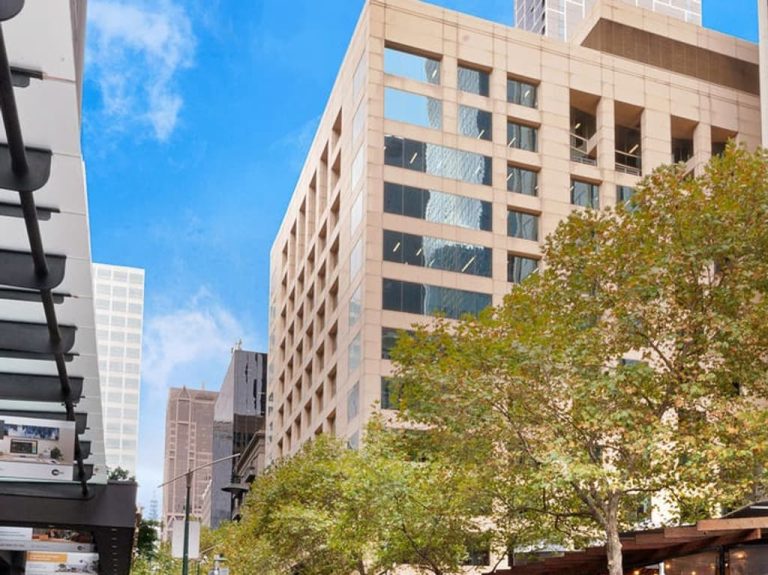
Taking control of the Melbourne tower leaves the Commonwealth Bank in the rare position of being the landlord of a major office tower.
Melbourne’s office tower market has hit a new low with the Commonwealth Bank taking possession of an office tower that cost US giant AEW Capital Management $175m.
Receivers at KordaMentha were quietly appointed in October as the Boston-based firm walked away, handing back the keys to 505 Little Collins Street to the big four lender.
This kind of play is common in the US where debt markets are deeper and more sophisticated, whereas the top layer of Australia’s office market is much more conservative and institutions value ties with banks.
AEW’s move signals that even top landlords are willing to cut their losses on buildings where they have been exposed and projects have gone awry, with industry players suggesting more landlords could follow suit.
Taking control of the Melbourne tower leaves the Commonwealth Bank in the rare position of being the landlord of a major office tower.
It faces a dilemma about whether to turn longer term holder and scramble for tenants to fill up the building or to quickly sell if off.
But the real impact of the surprise receivership is to come as it reverberates through the bank’s commercial loan book and those of its rivals.
AEW was caught out after buying the 12-level office building at 505 Little Collins St for $154m from Credit Suisse Asset Management in 2020. It was a successful trader and poured $21m into activating the 17,962 sq m block.
But the wider shift against Melbourne offices played out in the tower and it lost key tenants, including Study Group.
That derailed hopes it could trade out of the repositioned tower for about $90m when it went to market in June.
Despite an active campaign, the tenant departure meant it drew interest at around the $65m mark as occupancy levels dropped to about 35 per cent.
However, this was understood to be insufficient to cover the bank’s debt and ongoing works to bring in new tenants, with incentives and refurbishments to be covered.
The block was partly hit as buyers have switched to focus on income-producing assets and shifted away from lower quality stock where works will be required to win fresh tenants.
The Melbourne market has also had to absorb billions of dollars worth office towers being offered, with many buyers now on the sidelines until a change of government and geopolitical tensions fade and the rates cycle cools.
While the problems are building specific, the city’s malaise is expected to put other buildings under pressure as substantial gaps remain between buyers and sellers.
The reset is focused on secondary stock in the western core market with stress tipped to filter through this segment.
The bank and receiver declined to comment.
An AEW spokeswoman said it was working constructively “with the relevant parties as the process moves forward”.
“AEW has worked actively to reposition the property and evaluate the alternatives available, with the objective of protecting investor interests,” she said.