

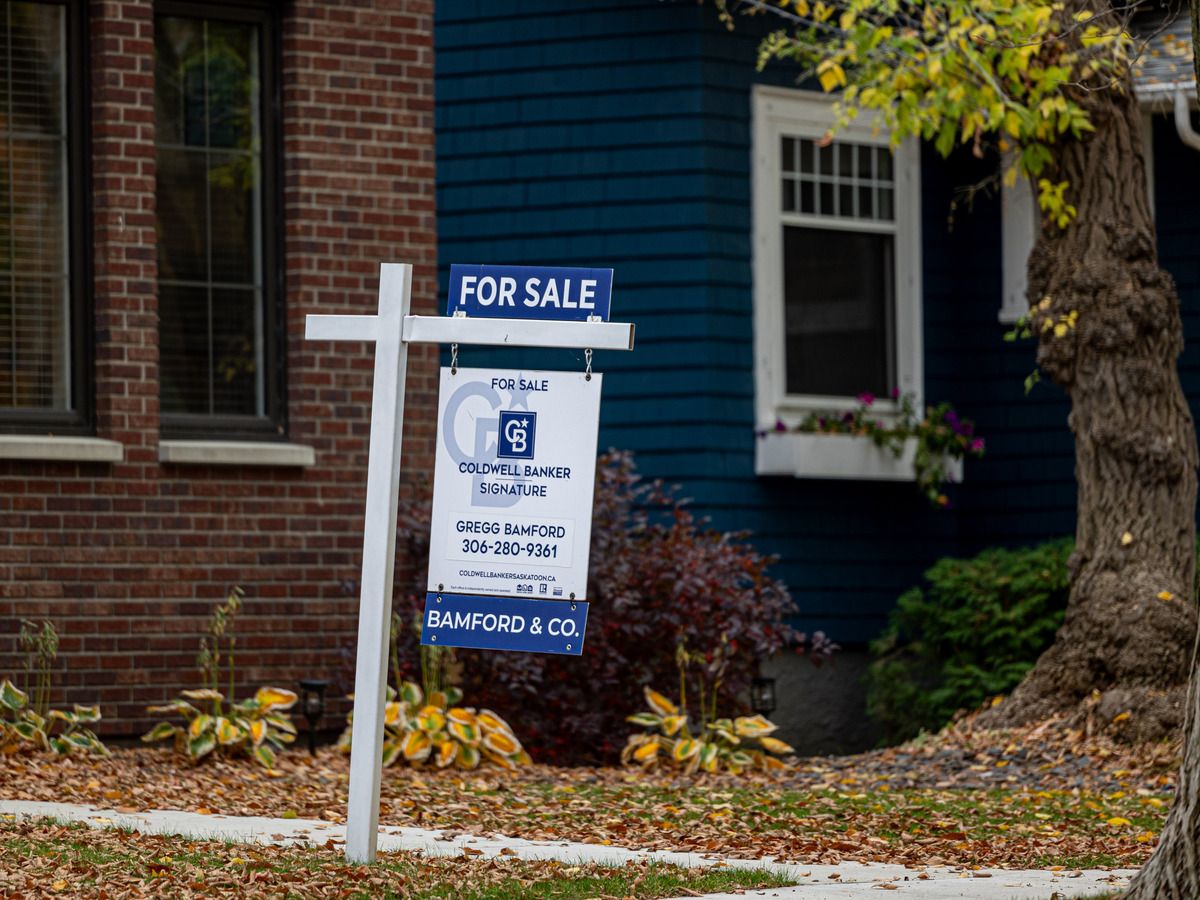
Canadian home sales edged higher for a fourth consecutive month in July while the national benchmark home price posted its first monthly increase in more than a year and a half.
Home sales rose 0.5 per cent from June on a seasonally adjusted basis, according to the latest data from the Canadian Real Estate Association (CREA). Actual sales, which are not seasonally adjusted, remained 5.3 per cent below July 2025 levels.
The national benchmark home price was $658,000 in July, up 0.1 per cent from June but down 3.2 per cent year over year. The monthly increase was the first for CREA’s home price index since November 2024.
Nationally, new listings fell 1.6 per cent from June marking the third consecutive monthly decline. With sales rising while fewer properties came on market, the national sales-to-new-listing ratio increased to 51.3 per cent from 50.2 per cent in June.
BMO senior economist Robert Kavcic said recent improvements in the market remain modest, with sales activity hovering around the low-end levels recorded before the pandemic.
In a note to clients, he said price declines are slowing with the three-month annualized pace of change roughly flat, compared to a decline of nearly seven per cent earlier this year. He said speculative activity has disappeared, investors remain largely absent and sales volumes remain low.
The improvement has not been evenly distributed across the country. Vancouver sales were down 9.6 per cent from a year ago, while Toronto sales were down just 0.9 per cent. Kavcic said some parts of the Toronto market, particularly larger, ground-oriented homes, are showing stronger activity.
Alex Zhvanetskiy, a realtor with Remax in Toronto, said he remains cautious about the recent improvement in activity.
“We’re seeing that there’s less new inventory coming to the market … (and) sales volume is going up, but the average sold prices continue to come down,” he said. “I don’t think we’re out of the woods yet.”
Zhvanetskiy said some prospective sellers are choosing not to list after learning what their properties are likely to fetch in the current market. Those who purchased during the pandemic years at higher prices can face a particularly difficult decision because selling now may mean taking a loss, especially once transaction costs are factored in.
There were 205,388 properties listed for sale across Canada at the end of July, just 0.6 per cent more than a year earlier and 1.5 per cent above the long-term average for the month. There were 4.7 per cent months of inventory nationally, the lowest level so far this year and slightly below the long-term average for five months
CREA considers fewer than 3.6 months of inventory a seller’s market and more than 6.4 months of inventory a buyer’s market, putting the national measure between those thresholds in July.
Darren Cabral, a realtor specializing in Simcoe County and Muskoka, is also seeing significant differences depending on location.
Cabral said properly priced homes in urban centres are attracting more showings and, in some instances, multiple offers. Two Barrie-area homes he sold over the past three weeks received multiple offers within 24 hours, with one selling in a day and the other in three days.
Rural properties are not having the same luck. Cabral said homes an hour or more outside major population centres can remain on the market for extended periods, particularly non-waterfront properties priced above $750,000.
Cabral said buyers are gradually absorbing some of the properties that accumulated on the market, but only when sellers are realistic about price.
“Things selling doesn’t mean prices are up,” he said. “People are not overpaying. It just means that transactions are finally happening quickly, but only at the right price.”
CREA said national figures only changed marginally from June, but pointed to more significant shifts in individual markets. Several markets in the Prairies, Quebec and Atlantic Canada that had previously favoured sellers now have more supply relative to sales than they did a year ago, while parts of Ontario and British Columbia have moved in the opposite direction.
In Ontario, for example, the sales-to-new-listing ratio (which measures the number of homes sold relative to new properties coming on the market) rose to 45 per cent from 43.3 per cent in June and 44.1 per cent a year earlier. In Toronto the change was more pronounced jumping to 37.2 per cent in July from 31.4 per cent in June and 30.5 per cent a year ago.
By comparison, the ratio fell to 56.2 per cent in Montreal from 64.4 per cent from a year ago and to 76.1 from 86.6 per cent in Quebec City.
• Email: shcampbell@postmedia.com