

Esto no bueno.
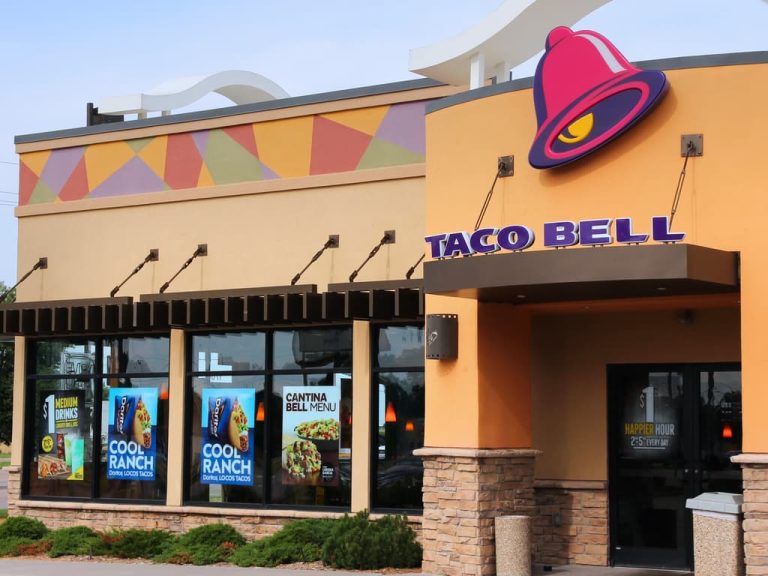
A New Yorker filed a class-action lawsuit against Taco Bell, accusing the fast-food chain of falsely advertising its fillings.
The fast food giant operates 27 chains across Australia and provides a different menu to its parent company in the US.
Frank Siragusa was lured to the Bell to “live mas” last September by images of the brand’s Mexican Pizza, the New York Post reports.
However, according to Siragusa, the $US5.49 ($A7.90) fan favourite contained only about half the meat and beans advertised in-store and online.
MORE: Macca’s shock new $62k Aus membership
Domino’s $300m hit, shuts 29 stores in Australia, NZ
Disney dumps Aus for good, Big W cashes
New Yorker Frank Siragusa is suing Taco Bell for $US5m, alleging false advertising of its menu items’ fillings.
According to the lawsuit, other popular Taco Bell menu items, including the Crunchwrap Supreme, Grande Crunchwrap, and Veggie Mexican Pizza, have similarly exaggerated the amount of filling in advertisements by “at least double the amount.”
To support his claims of “unfair and deceptive” practices, Siragusa included side-by-side photographs showing the disparity between advertised meals and the substantially smaller items served to customers — misrepresentations the suit argues are even more critical amidst inflating food prices.
“Meat prices are very high and many consumers, especially lower-income consumers, are struggling financially,” Siragusa’s attorneys stated in the suit.
Siragusa is suing Taco Bell for $US5 million ($A7.5 million) on behalf of customers impacted by false advertising.
Siragusa’s lawyers, James Kelly and Anthony Russo, previously filed a lawsuit against Burger King, alleging the fast-food giant engaged in false advertising by overstating the size of its Whoppers. That case went to mediation and later reached an impasse.
The latest lawsuit comes at the tail end of a tough summer for Taco Bell.

According to Siragusa, his $US5.49 Mexican Pizza contained only about half the meat and beans advertised in-store and online. Picture: Joshua Blanchard/Getty Images for Taco Bell
In July, shredded iceberg lettuce supplied to the fast food chain by Salinas-based Taylor Farms was linked to the outbreak of cyclosporiasis, which causes explosive diarrhoea, vomiting, and bloating among other debilitating symptoms.
“The health and safety of our guests is our top priority,” Taco Bell Corp. said, adding that it “voluntarily and temporarily removed limited ingredients at select restaurants as a precautionary measure.”
Two residents of Michigan, which saw more than 11,000 cyclosporiasis cases, died from the foodborne sickness.
Victims of the stomach-churning condition could recover anywhere from $US20,000 to $US1 million ($A28,000 to $A1.5 million), depending on the severity of their case, according to attorneys seeking legal action against Taco Bell. A death could garner a seven-figure settlement.
Meanwhile, the beans Siragusa claims were meagre in his meal became the focus of online controversy after an employee exposed the restaurant chain’s questionable bean-preparation practices.
Visuals of the controversial food prep, shared via @ItzSleepyPanz, show a kitchen employee dumping warm water onto brown, dehydrated, stringy scraps, allegedly stirring the blend into Taco Bell’s refried beans.
The eye-popping post has amassed over 13 million views from divided digital audiences worldwide.
It comes as hundreds of staff at Taco Bel restaurants across Australia were left in limbo after revelations seven of the chain’s 27 stores would close.
ASX-listed fast food giant Collins Brands is finalising an agreement to offload its ownership of stores after the brand failed a third attempt to win over the tastebuds of Australian customers.
The stores will be acquired by Restaurant Brands Australia, which already owns the brand and operates the 10 NSW stores.
RBA will pay a “nominal amount” for the stores, as well as stock value and cash floats.
The remaining seven Taco Bell stores will be closed, with impacted locations yet to be announced.
Outside of NSW, Taco Bel operates restaurants in Queensland, Victoria, and Western Australia.
Parts of this story first appeared in the New York Post and were republished with permission.
MORE: ‘Disaster’: Sad $10m feud split cult Aussie empire
‘No longer’: Cult store to abolish Aussie cafe scene
$100m burger empire’s huge Aussie rollout