

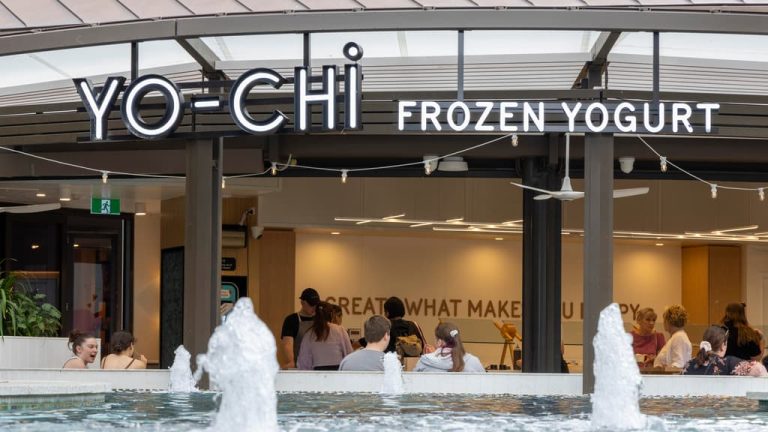
Yo-Chi and its rivals have turned dessert into an alcohol-free, late-night hangout, and it’s good news for landlords.
Not so long ago, Yo-Chi was the kind of tenant no commercial landlord would want: four small Melbourne stores, owned by a hospitality group in collapse, in the middle of a pandemic.
When George Calombaris’ MAdE Establishment went into administration in 2020, Yo-Chi was the only part to survive, and the Allis brothers, sons of Boost Juice founder Janine Allis, bought it out of the wreckage.
Now the queues stretch outside, the stores trade late, and there’s a 165-seat flagship at Sydney’s Barangaroo. The brand is expanding into the UK, US, Thailand and Singapore.
Yo-Chi stores operate in both small retail spaces and larger experience-driven venues. Picture: Supplied
There are plenty of rivals, from Yogurberry, YOMG and Yo-Get-It to a swarm of copycats, with Australia’s fro-yo market projected to grow from $450m to $820m by 2034.
This isn’t a rerun of the 2010s frozen yoghurt boom though. Today it’s as much about the destination as the dessert.
“Frozen yoghurt [fro-yo] is having its cultural moment in Australia driven by the contemporary Gen Z and Gen A lifestyle — a segment of consumers who are looking for health-oriented, treatable, sharable and experiential retail,” explained Macquarie Business School’s Professor Jana Bowden.

Macquarie Business School’s Professor Jana Bowden says fro-yo appeals to younger consumers seeking a shareable experience. Picture: Supplied
Trent Rigby, director of Retail Customer Advisory, says Yo-Chi has reinvented the category by creating an aesthetic third space — a place separate from home and work.
“When I was a teenager I was hanging out in the Westfield car park. They’ve created a safe and inviting place and it’s cool to be seen there.”
And the stores keep getting bolder, he says. “The one in Barangaroo is huge with seating for 165 people. In London they have a massive disco ball and a DJ. The one in Dallas is humongous — it’s more like a restaurant.”

Retail Customer Advisory director Trent Rigby says Yo-Chi has created a place where young people want to be seen. Picture: Supplied
But while the model does well in large spaces, he says, it also works in small ones designed for quick stops, like in Sydney’s Circular Quay.
Why landlords are paying attention
Experts say today’s fro-yo has flipped the old grab-and-go model of takeaway outlets and kiosks, which did little for foot traffic.
Ms Bowden says the ‘third-place’ effect spills into the whole precinct, and data shows stores like Yo-Chi lift Google search navigations to themselves and nearby shops by 92%.
“These novel experiential retailers are driving centre attractiveness and strengthening occupancy and rents,” she says.

Yo-Chi’s large-format restaurants drive increased foot-traffic to nearby businesses. Picture: Supplied
Knight Frank’s retail leasing and projects coordinator Marie Formica says ‘dessert hang out’ operators suit larger-format sites, typically 150-250sqm, that are hard to re-let, including former bank branches, vacant hospitality venues and prominent corner sites.
“With lower infrastructure requirements than traditional restaurants, they offer a practical and flexible solution for these vacancies,” she says.

Knight Frank retail leasing and projects coordinator Marie Formica says “dessert hangouts” like Yo-Chi can suit larger-format sites that are harder to re-let. Picture: Supplied
The sites they chase have a common thread: young crowds and evening trade — think dining strips, cinemas, gyms and universities.
Yo-Chi CEO Brooke Rodger says there’s no fixed formula.
“We look for locations with a great local community of students and young families. We love being among casual restaurants. Beachside locations are often a winner.”

Yo-Chi CEO Brooke Rodger says coastal locations are often winners. Picture: Supplied
The economics help. Mr Rigby says the set-up is minimal compared with quick service restaurant models like GYG, McDonald’s or KFC, which need large commercial kitchens. Plus customers do a lot of the work, which helps to boost profits.
Furthermore, fro-yo is ‘affordable luxury’, he adds — people can handle $15-$20 a visit even as the cost of living burns.
Not all brands are equal
But while larger premises may promise bigger rent, the question is, can the operators carry it?
That depends on the brand, says Ms Formica.
“Established brands such as Yo-Chi, Gelato Messina and larger açai chains often provide landlords with greater confidence due to their brand recognition, proven business model and stronger financial backing,” she says.
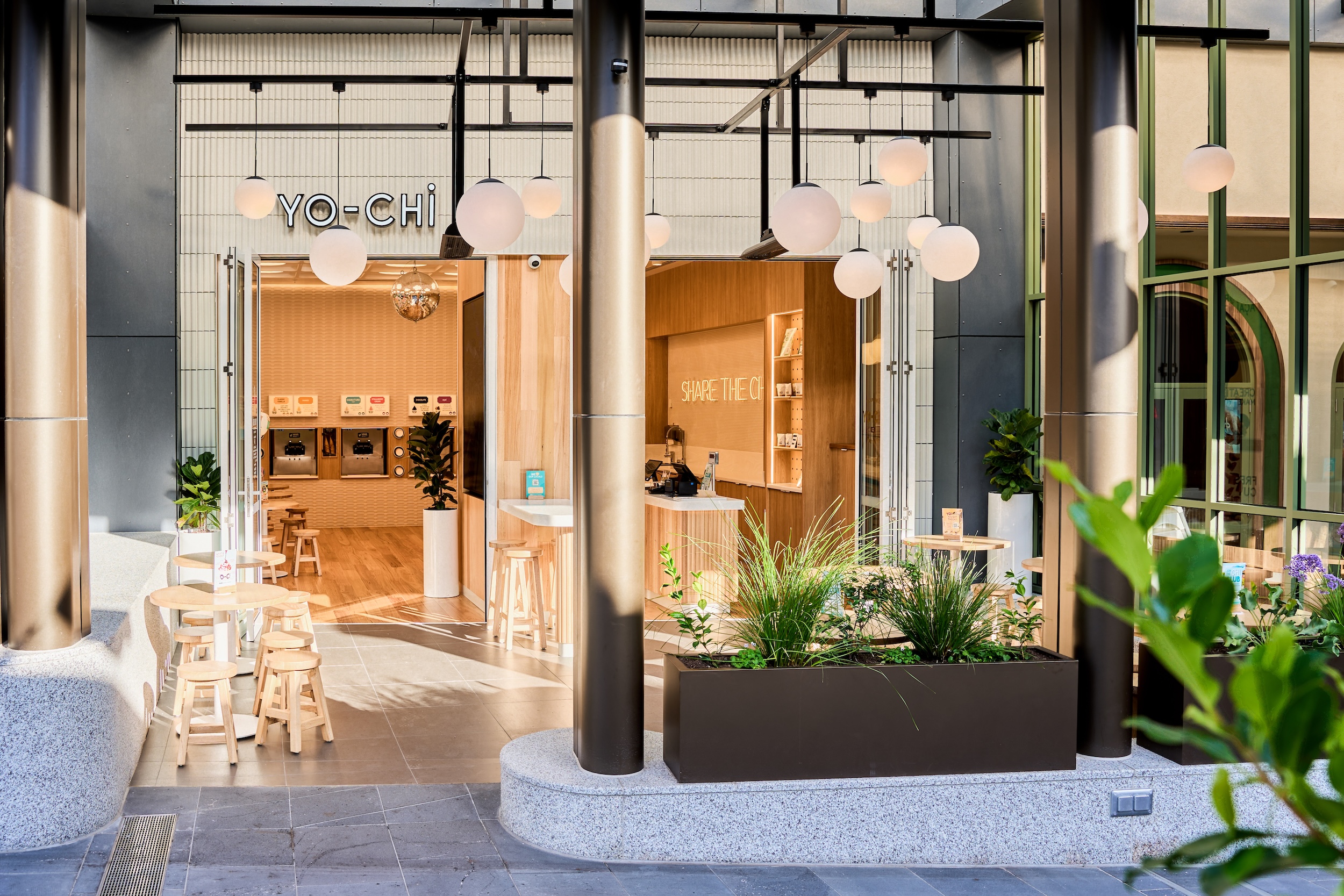
Established brands such as Yo-Chi and Gelato Messina give landlords more confidence, says Knight Frank retail leasing and projects coordinator Marie Formica. Picture: Supplied
Mr Rigby says fro-yo’s easy set-up means plenty of copycats, and he questions how many operators there can realistically be in Australia.
“It’ll be interesting to see whether copycats can also create that late-night venue as Yo-Chi has done.”
Experts say landlords should watch for warning signs: market saturation, rising vacancies and growing leasing incentives.
Is the fro-yo craze sustainable?
The fro-yo trend may be building on a global scale, its momentum riding on social media and FOMO. But what’s cool to one generation can be cringe to the next.
Mr Rigby says the risk is real. “All things fade, right?” he says — and Gen Z and Alpha are the hardest crowd of all.
“They’re easy to get in the door from a marketing point of view, but from a loyalty point of view, they’re always moving on to the next thing.”

Customers queued outside Yo-Chi’s new Singapore store from 3am until 11pm when it first opened. Picture: Supplied
Young buyers are worth chasing though, says Ms Bowden. Gen Z leads younger cohorts in impulse buying, averaging $270 a week on unplanned purchases, and their spending power is set to rise and peak in the 2030s, she says.
Yo-Chi’s Rodger believes fro-yo will stay relevant as long as the product is great and people enjoy hanging out in the spaces.
Mr Rigby agrees Yo-Chi will continue to be a strong fro-yo player that can weather multiple different economic climates. The question is, he says, whether it can keep innovating and stay front of mind.
One clue to the chain’s own thinking, he says, is how heavily it has expanded overseas in recent months.
“To me that suggests they think growth maybe somewhat limited in Australia in the medium and long term.”