

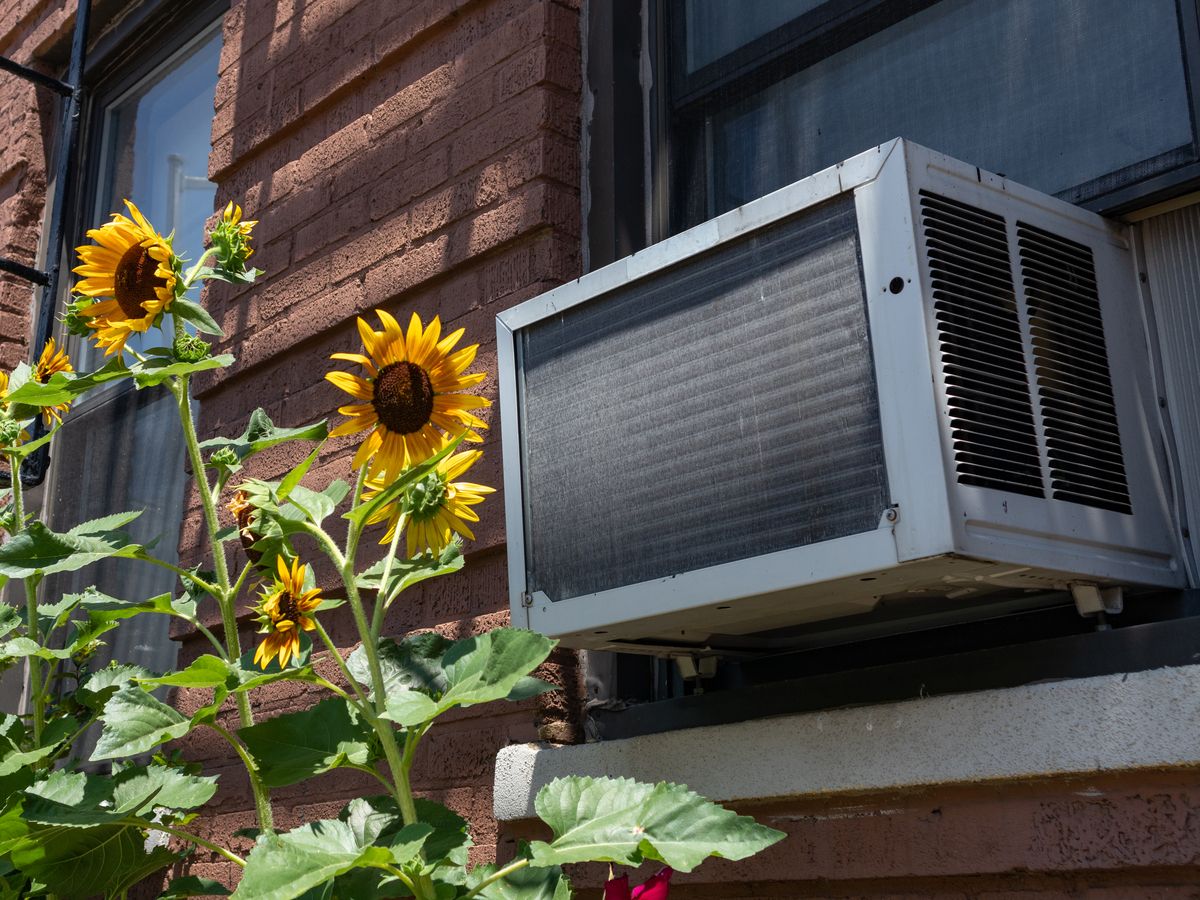
Things got hot in Canada’s largest city this month, not just in apartments with no air conditioning but at Toronto city hall, where councillors debated the need for a maximum indoor temperature.
A potential bylaw, which would set an upper limit of 26 degrees Celsius in apartment buildings, came as outdoor temperatures soared above 37 C, setting records for this time of year. Add in some of the worst air quality in the world, and it was logical to stay indoors if you had air conditioning.
Most in the city do, but many renters in apartments that can date back 75 years or more aren’t so lucky.
The question that has made implementation of such a bylaw a sticking point for 14 years is, “ Who pays for it? ”
Landlords are the easy target , but Derek Lobo, chief executive and broker of record at Rock Advisors Inc., said it would be the “making of a disaster” if building owners were forced into costly upgrades for an apartment stock built in the 1950s, 1960s and 1970s.
“It’s a massive capital expenditure,” said Lobo, noting it can costs tens of thousands per unit for an upgrade depending on the work being done and the cooling systems being changed.
An HVAC executive, whose firm has been upgrading systems for decades but asked not to be named because of customer relationships, corroborated those figures, estimating the cost for individual units can range from $8,000 to $13,000 depending on the city size and in the “millions” for buildings. The variables in aging buildings make estimating costs difficult, he said.
Lobo doesn’t believe it should be the landlord’s responsibility to absorb such costs, but rent-control stipulations currently in place will make it hard to pass the costs along.
Ontario capped increases at 2.1 per cent for rent-controlled apartments in 2026. Above-guideline increases were capped at three per cent for capital improvements.
Toronto Councillor Josh Matlow is unapologetic about a proposed bylaw that councillors gave city staff 12 months to draw up, in time for summer 2027.
“It is complex,” said Matlow, of getting the proposal, which he has backed since 2012, to this point. “What is not complex and very simple to understand is study after study has demonstrated that if your home is in excess of 26 C, it is not safe and healthy.”
He acknowledges concerns landlords have about costs and passing them on in rent .
“Yes, tenants don’t want to pay for it but of all the things it is not the worst thing to pay for,” said Matlow, adding that provincial rent control rules are going to limit how much can get passed on.
Matlow said he is not against a solution that includes some government subsidy to upgrade units but believes the status quo is not an option.
“We wouldn’t just say to a restaurant, (your) kitchen shouldn’t be safe and clean just because there might be some costs,” he said.
But what about the unintended consequences? Raising the cost of operating older apartments that generate average returns means some landlords may be forced to cut back in other areas, for example reducing maintenance to the legal minimum. They might even go so far as to consider redeveloping the sites, if the economics no longer work.
David Lieberman, vice-president of the national apartment team at real estate firm Avison Young, said investor demand for older buildings that are not air-conditioned still exists, but it’s hardly gangbusters.
Many of these older units have long-term tenants covered by rent control who are not moving any time soon and pay well below market rates .
“They are very affordable, and those tenants are not going to move,” he said.
So what happens if the costs go up and the returns drop even lower? Avison Young said returns or cap rates on apartments in Toronto were about four per cent in the last quarter.
Canada’s largest apartment trust, Canadian Apartment Properties, has a forward yield of under 4.5 per cent, the expected dividend return in the next year based on the stock price. You can almost do as well in a guaranteed investment certificate.
No question the ability to raise rent on vacated units is attractive in some cases, but most of that low-hanging fruit is gone. And the speculative building boom has slowed.
What are left are some older units and landlords attracted to the cash flow. Despite reports of deadbeat tenants, most of them are pretty reliable, and you can count on the income. Lieberman said that continues to drive sales for now.
Marielle Hossack, director of policy and regulatory affairs of the Federation of Rental-Housing Providers of Ontario, said a provincial rule change is addressing some of the issues around heat.
The Ontario government passed legislation effective July 1 that permits tenants to install and use a window or portable air conditioner in a rental unit for which the landlord does not supply air conditioning.
Not all have been happy with this arrangement, however. Tenants with separately metered units end up paying the extra costs of those air conditioning bills, and when utilities are included in rent, landlords can pass on the hydro costs based on the increase.
Hossack said a bylaw that forces an entire building to be air-conditioned doesn’t consider that some older buildings cannot handle the electrical load.
“Our buildings were not built for air conditioning, and a whole other system needs to be implemented and it takes more time. You can’t have a blanket bylaw for properties when some are 100 years old,” she said.
An added issue is there would be less money for modernization of other issues at some of these older units, projects that were already in the pipeline. “Now the funds could have to be allocated elsewhere,” she said.
One alternative that is gaining traction is the heat pump, which can provide both heat in the winter and colder air in the summer months by essentially running the system backwards.
While acknowledging that upgrades can be costly, Toronto-based Bondi Energy Corp., which specializes in energy efficient retrofits, said heat pumps can reduce the overall energy being used meaning not as much pressure on the electrical grid.
Belinda Gilbey, president and co-founder of the company, said 10 per cent of Ontario’s apartment stock has baseboard heating, which can be replaced for as little as $10,000 a unit and cut energy use in half.
“Those buildings are the lowest-hanging fruit, and it’s really easy to put in a heat pump because the building has the capacity,” she said.
Her group estimates $1,000 in savings per apartment per year, which translates into a $25,000 increase in a unit’s value based on the increased cash flow. Multiplied by 100 units, the value of your building could rise by $2.5 million, justifying that $10,000 outlay per unit.
“Those are just no-brainers,” said Gilbey, about those units. They can become separately metered so the landlord is not absorbing those extra cooling costs.
So why isn’t everybody doing this? Aaron Graben, Bondi Energy’s other co-founder, said they are, but slowly. “It’s the cash outlay,” he said. “If they do nothing, it stays the same, and they collect their money.”
Doing nothing could become less and less of an option if Toronto has its way. But the reality is someone is going to have to pay for the upgrade and it’s not clear the grid can even handle it. Bondi executives noted the Ontario Energy Board regulates use and building owners cannot just take more power than they have allotted.
Hossack of the FRPO said we can’t just have a bylaw and poof, everybody has air-conditioning.
“This is multifaceted,” she said. “And we can’t just say, ‘Do it.’”
• Email: gmarr@postmedia.com