

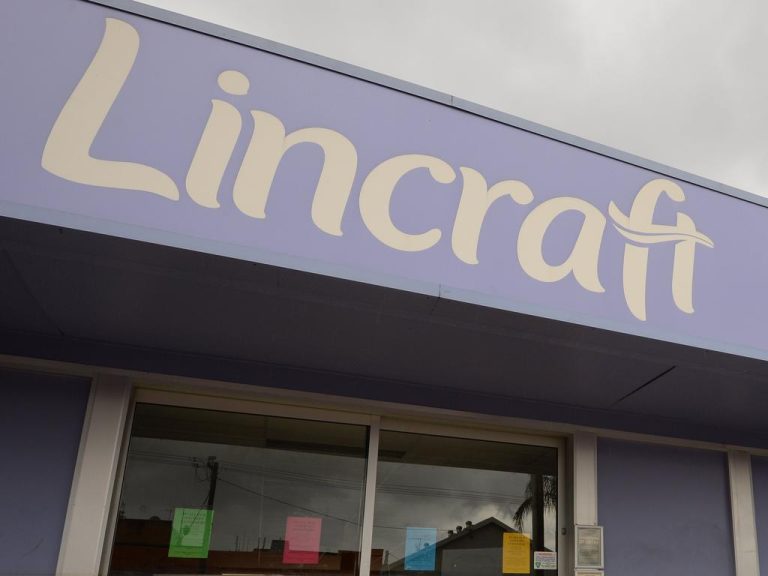
Australia’s beloved craft institution, Lincraft, is progressively shutting the doors on its entire network of over 60 physical stores across Australia and New Zealand, eliminating hundreds of jobs.
The news, initially conveyed to Lincraft Club members via email on Tuesday, confirms the progressive closure of its brick-and-mortar outlets over the coming months.
While the online store will continue to operate during this transition, the physical departure of such a longstanding tenant will undoubtedly impact local retail precincts.
“Today, we are sharing news that is both difficult and deeply emotional for everyone at Lincraft,” the company said.
“After more than 80 years of serving creative communities across Australia and New Zealand, we have made the decision to progressively close our physical store network over the coming months.”
Lincraft is closing its entire network of more than 60 stores across Australia and New Zealand.
Lincraft managing director John Maguire described the decision as “extremely difficult” to Inside Retail, particularly highlighting the impact on the company’s long-serving team members.
“Our priority is to support our team members through this transition and to communicate with them as clearly and respectfully as possible,” Maguire said.
For the commercial property sector, the closure of over 60 stores represents a considerable amount of floor space that will soon become available.

Lincraft staff members Nic Condie, Sarah Zammit and Alison Wassell
This influx of vacancies could put pressure on rental yields in some areas, particularly if the spaces are large or in secondary locations.
However, it also offers a chance for new retailers or alternative uses to revitalise these sites.
The craft retailer’s journey began in 1938 as Suzanne Silks, founded by Leo Ross at the Melbourne markets.

Lincraft staff members Maija Gorkic and Yvonne Hender at the fabric retailer’s new store in Rundle Mall, Adelaide, 05 Mar 1991.
It remained a family enterprise for three generations before falling into receivership in 2005. This decline was largely attributed to a fundamental shift in consumer behaviour, with shoppers increasingly opting for ready-made clothing over the traditional practice of creating their own.
Despite a revival under John Maguire and Brian Swersky, who acquired and restructured the business as Lincraft Australia in March 2005, the long-term trend away from DIY craft and garment production appears to have ultimately made its extensive physical footprint unsustainable.