

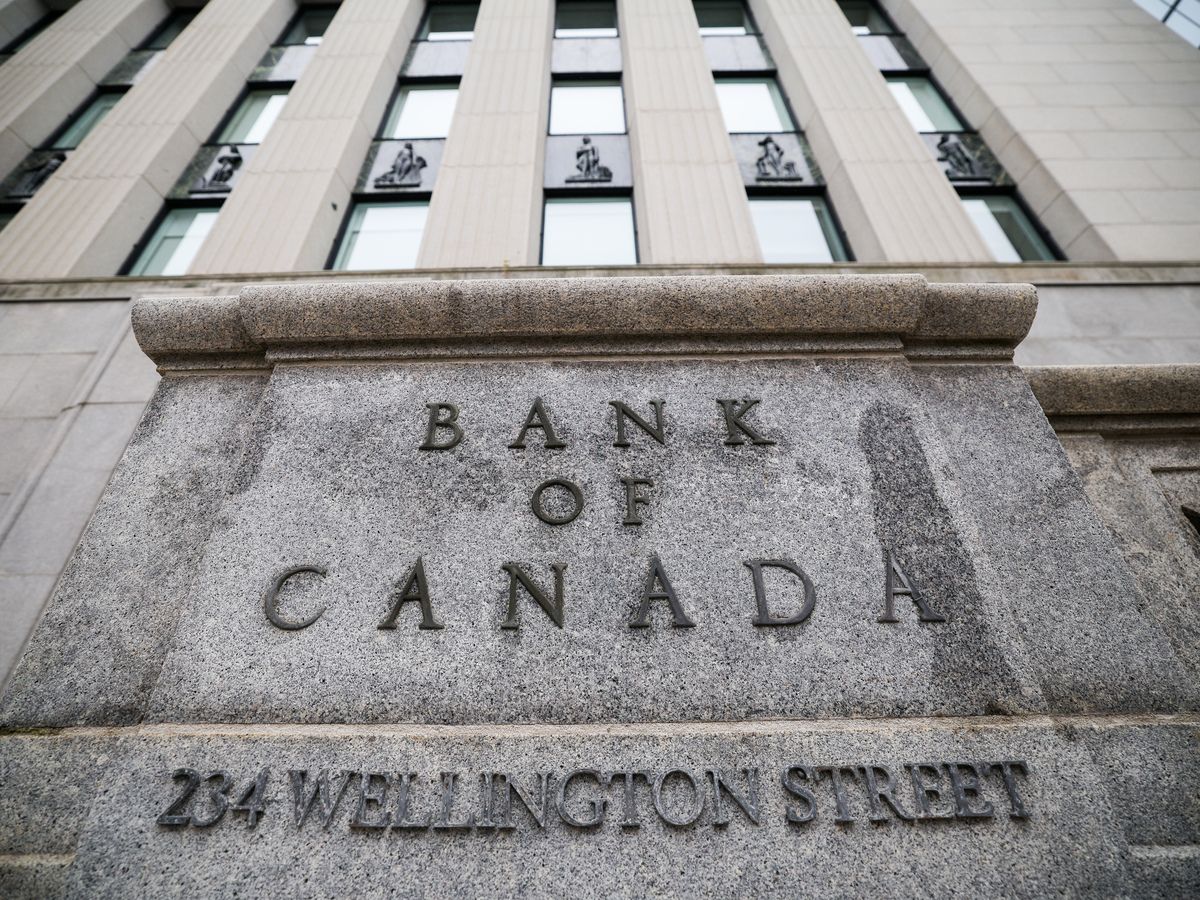
I’m about to do a little Monday morning quarterbacking. And no, this isn’t a victory lap to show off my 20/20 hindsight — it’s a post-mortem to save you some grief and money as a borrower.
First, a universal truth: predicting interest rates is a sport where confidence is abundant and track records are not.
For months — until recently — the economic establishment largely sang in a choir, giving insufficient credibility to a Bank of Canada rate hike this year. They had a whole binder of reasons why:
- Core inflation was contained.
- The labour market was deteriorating.
- Tariff uncertainty demanded central bank patience.
- You have to look through energy shocks.
- Rate hikes can’t solve energy shortages.
- Bond markets were already tightening for the central bank.
We heard almost every reason in the book why a hike wouldn’t happen — and then it happened.
Now, I don’t like to throw stones, especially since I’ve met a lot of top economists and they seem to be good people who are probably smarter than me.
But even as bond yields surged, dragging fixed mortgage rates up by their hair, most (not all) were telling us that prime rate increases were not a significant threat.
Meanwhile, the bond market was pulling the fire alarm.
Forward and swap markets had it right for months, directionally that is; they only got the timing right in September when hike probabilities for the next meeting topped 60 per cent — my line in the sand for taking a move seriously.
Long before that, CanDeal DNA data showed the CORRA forward curve screaming about higher rates for over half the year, pricing in 75 to 125-plus basis points of tightening over the next 12 to 24 months.
At times, market expectations were implying 150-plus basis points of policy rate tightening over a five-year mortgage term.
The timing wasn’t exactly right, but the direction was.
The market’s message at the time (back when fixed rates were much closer to variable rates ) was crystal clear: rate cuts were dead and buried, and variable mortgages were a much bigger gamble.
Yet, a parade of economists kept trotting out the same tired narrative that the Bank of Canada should be cutting.
That disconnect leaves us with four major takeaways for your wallet:
1. Ignore published rate predictions that diverge from the market.
If Bank of Canada rate forecasts are couched in terms of market probabilities, that’s fine. But if some talking head is making their own contradictory market call, be wary.
Economists are great at explaining why their last forecast was wrong or spotting broad macro trends. But when it comes to calling actual rate moves, a room full of tri-letter experts (MBAs, CFAs, PhDs) is no match for the collective wisdom of traders betting trillions of actual dollars in the bond market. Pundits have opinions; the bond market has skin in the game.
2. Track the forward curve.
In my early days on the job, I used to dutifully publish the Big Six banks’ consensus rate forecasts every month because readers wanted them. In hindsight, I might as well have been publishing their horoscopes.
Bank economists almost always end up chasing market pricing anyway, so cut out the middleman and watch the numbers yourself.
Start with the two-year Government of Canada bond yield. When you see this trifecta — the two-year yield is above its 18-month moving average; it’s sitting 50-plus basis points above the Bank of Canada’s overnight target, and its 18-month average is below its 50-month average — start planning for potentially higher borrowing costs.
That signal is especially loud when it happens right after the Bank of Canada’s key rate has sunk 200-plus basis points and then flatlined — like it did after June 4, 2024.
Is this peer-reviewed science? No.
Swap, futures and forward markets are notoriously wrong at times; crises come out of nowhere and there isn’t a big enough sample size for a bulletproof back test.
Moreover, markets seldom get the magnitude of rate cycles right in advance. For all we know, a crisis could make the Bank of Canada next move a cut in 2027.
Hence, you shouldn’t bet your financial life on market indicators or a single mechanical rule.
But while calling the above shortcut a rock-solid formula is foolish, calling it more useful than quants who can’t see the forest for their spreadsheets is not.
3. If you must trust economists’ predictions, pick the right economist.
Not everyone got Wednesday’s hike wrong.
On November 12, 2025, for example, Scotiabank Economics wrote , “The Bank of Canada is done cutting rates, with the next move expected to be an increase in the policy rate in the second half of 2026.”
That was nearly a year ahead of the hike we just got. Scotiabank’s team, led by Jean-François Perrault and Derek Holt, has been ahead of the curve most of this year.
Were they lucky? Maybe a little.
Obviously, nobody had “war drawn up on a napkin and paid for at the pump” on their 2026 bingo card.
Mind you, the bank did have more conviction in its hike call after energy costs started zooming, while many others were too busy focusing on economic risks.
Moreover, Scotiabank nailed some core drivers way ahead of most, like rising input costs, fiscal support boosting 2026 growth, steady wage growth and more.
A few others were right as well, including National Bank strategist Ethan Currie, who last December called for hikes late this year.
4. Don’t predict. Manage risk.
Pro forecasters have it tough. They get paid to stand in front of a camera and guess the future, but the future likes to change its plans without notice.
Fortunately, you don’t need a magic crystal ball to manage mortgage risk — you just need a sense for where we sit in the cycle.
History shows that floating your mortgage wins most of the time, except at certain major inflection points.
Before the first hike in a new cycle, for example, markets start pricing in tightening well in advance. The two-year government yield starts creeping up and inflation starts looking spicy. All else being equal, that’s your cue to look hard at three- to five-year fixed rates (assuming your five-year plan, net worth and stomach for volatility agree).
But it also depends a lot on what rates you can access. Near the top of rate cycles, you might get a one-year fixed that’s a far better deal than a variable, for example.
Most importantly, remember that what goes up eventually meets gravity. Once the Bank of Canada starts hiking, inflation almost always gets wrestled back to target within a few years.
Locking into a five-year fixed after five-year yields have already mooned and the central bank has hiked multiple times is like buying flood insurance after your basement is underwater.
If at that point you still need the peace of mind that comes with a fixed rate, consider a shorter leash, like a three-year term.
At the end of the day, this is just basic rate-cycle hygiene. You don’t need a panel of TV experts to figure it out, so do your sanity a favour — grab the remote and hit mute.
Robert McLister is a mortgage strategist, interest rate analyst and editor of MortgageLogic.news. You can follow him on X at @RobMcLister.
Looking to save on your mortgage?
For the best national insured and uninsured mortgage rates, updated daily, please visit our mortgage rate page here .